
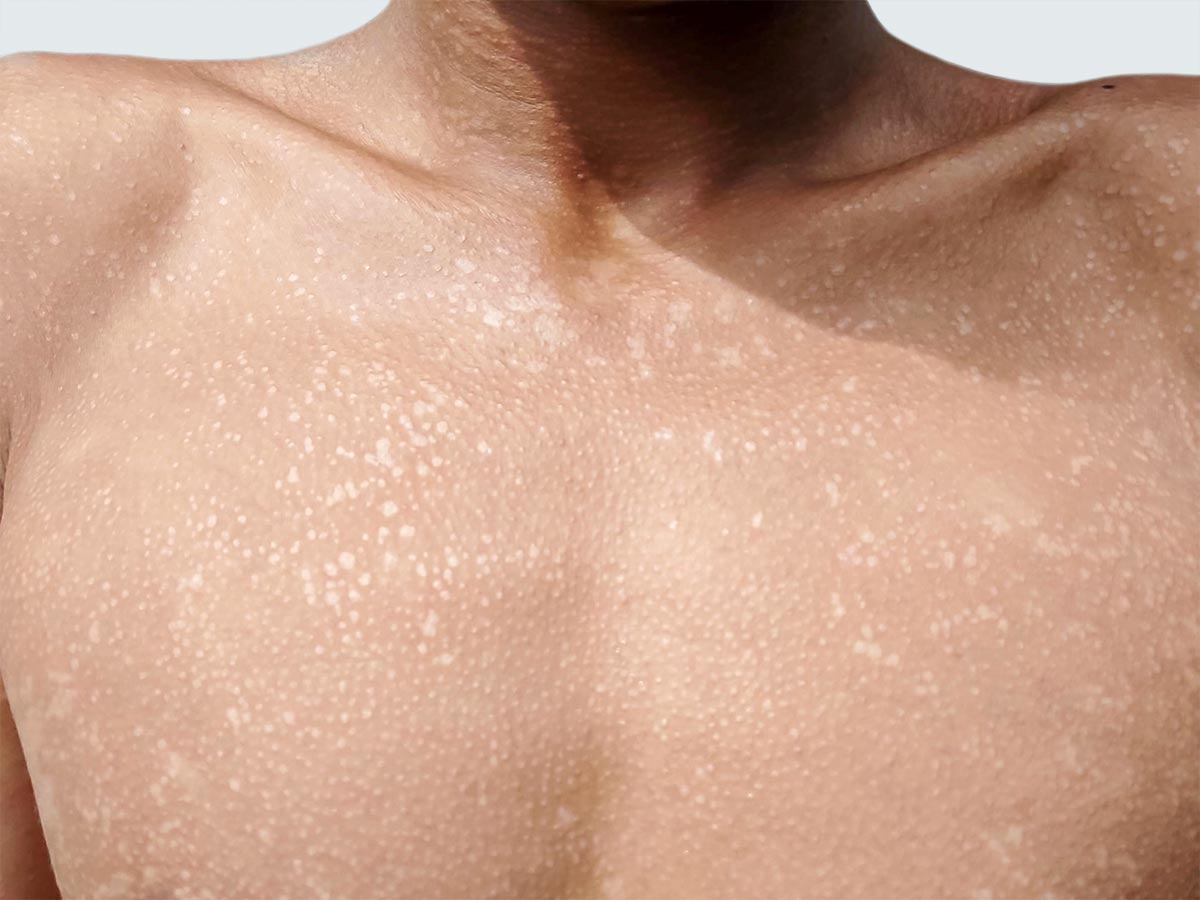
 Tinea versicolor is a common skin condition that is caused by an overgrowth of the yeast that lives on everyone’s skin. It is considered to be a fungal infection because yeast is a type of fungus. Unlike other fungal infections, tinea versicolor is not contagious.
The first sign of tinea versicolor is usually small, light-colored spots on the skin. These spots may be tan, pink, or very faint. As the yeast continues to grow, spots might combine and form patches of skin that are either lighter or darker than normal.
Anyone can have tinea versicolor, though people with oily skin, such as teens and young adults, get tinea versicolor more frequently.
Treatment
Before recommending treatment, your dermatologist will consider several factors, including where the tinea versicolor appears on your body, how much of your skin is affected, and the weather where you live. Although the yeast is easy to control and does not cause scarring, it can take weeks or months for your skin to return to its normal color.
Topical
Your provider may recommend a prescription-strength or over-the-counter anti-fungal shampoo, soap, cream, or lotion to keep the yeast under control. The active ingredient in these products is usually selenium sulfide, ketoconazole, or pyrithione zinc.
Medicated Cleansers
Tinea versicolor is most common when it is warm and humid outdoors. During these times, a medicated cleanser with selenium sulfide, ketoconazole, or pyrithione zinc, used once or twice a month, may help to keep yeast growth under control.
Oral Medications
If your tinea versicolor covers a large area of your body or returns frequently, your dermatologist may prescribe anti-fungal pills.