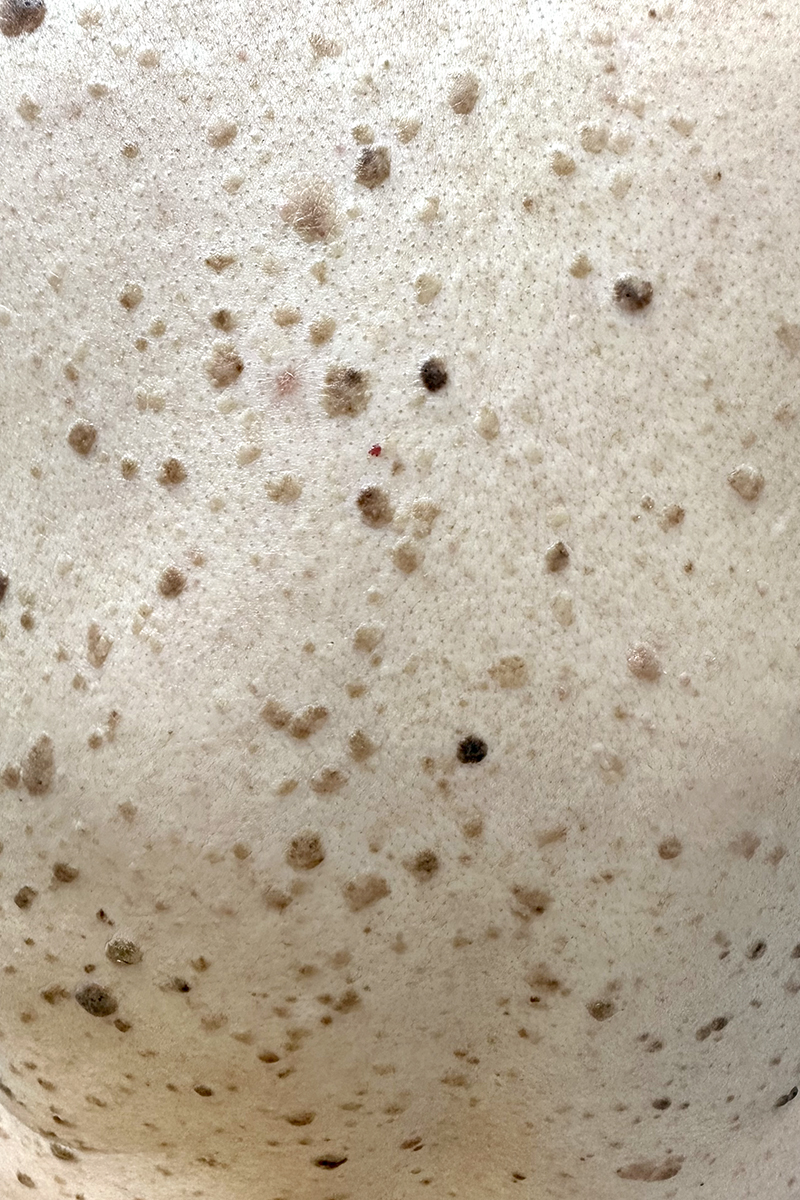
 Seborrheic keratoses (SKs) are common, benign skin growths that can occur anywhere on the skin. They most often form on the chest, back, scalp, face, and neck. They do not form on the palms of the hands or soles of the feet. While anyone can develop an SK, they are typically associated with old age. These growths generally first appear in middle age or later. Children rarely develop SKs.
Appearance
Most SKs begin as a small, rough bump, though they can also be smooth and flat, and sometimes are mistaken for other common growths like warts or moles. They are typically brown, and range in color from tan to black. The most distinguishing trait of a seborrheic keratosis is its dull, waxy, pasted-on-the-skin appearance. An SK will often look like a dab of candle wax on the skin.
Treatment
As seborrheic keratoses are benign, treatment is usually not necessary. However, your provider might recommend removing an SK that grows quickly, turns black, itches, or bleeds, as these are signs of potential skin cancer.
Though SKs are benign, some people ask to have them removed, especially if they are large, easily irritated by clothing or jewelry, or are considered unsightly.