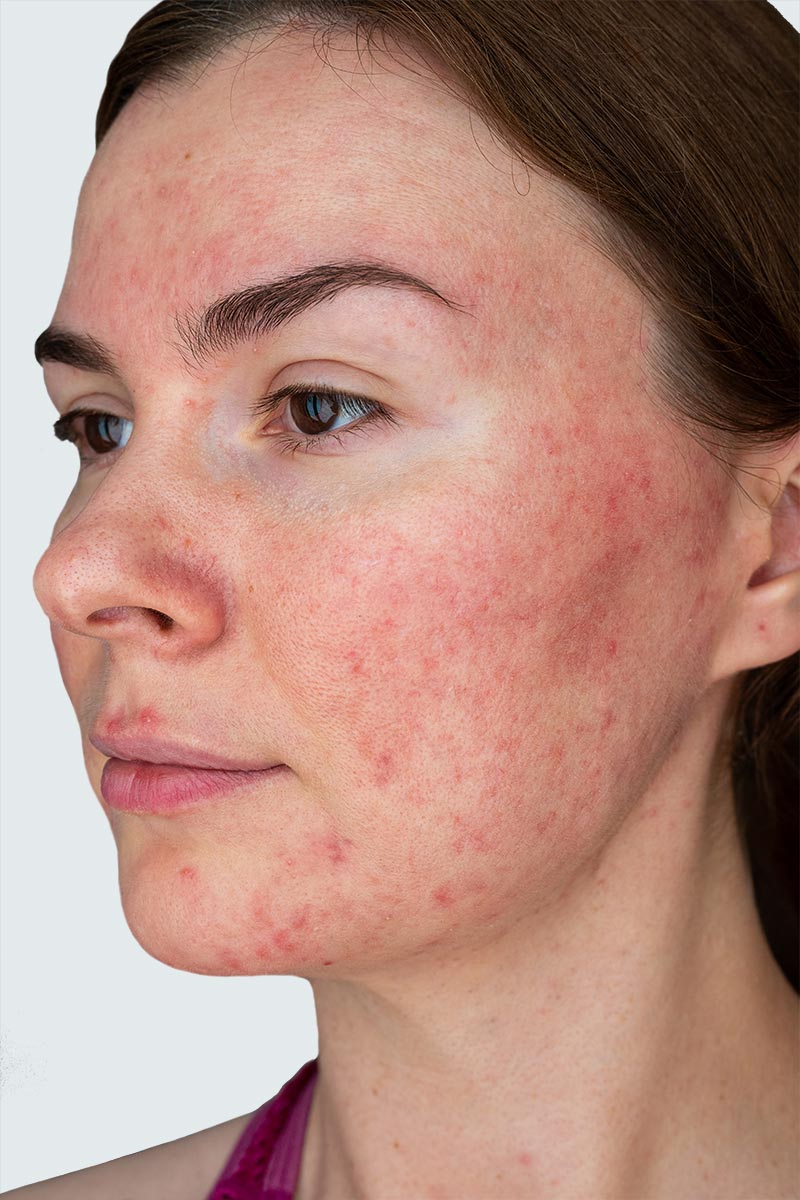
 Rosacea is a common skin condition, affecting approximately 10% of the population. It typically affects fair-skinned adults, but it can affect all age ranges and skin types.
Symptoms
Rosacea often begins as a redness in the nose and cheeks. However, this redness can spread, extending to the forehead and chin, as well as beyond the face to ears, chest, and back.
There are usually some little broken blood vessels (telangiectasias) on the skin. Many people may get acne bumps with their rosacea and this is often called adult acne. Some people will get significant flushing episodes (flares of redness). Rarely, you can get an associated thickening of the skin, most commonly seen on the nose of men.
Rosacea can also affect the eyes. If you experience sensitivity to light, a gritty feeling in your eyes, frequent styes, or other new eye symptoms, please let your provider know.
Triggers
People will often be able to identify some triggers for their rosacea (things that cause flushing, make the redness worse, or cause more acne bumps).
Sunlight
Sunlight (or ultraviolet light) is one of the most common triggers of rosacea. For this reason, it is extremely important for you to wear sunscreen of at least SPF 30 every day.
Other Triggers
- Hot foods
- Spicy foods
- Alcohol
- Hot or cold temperatures