
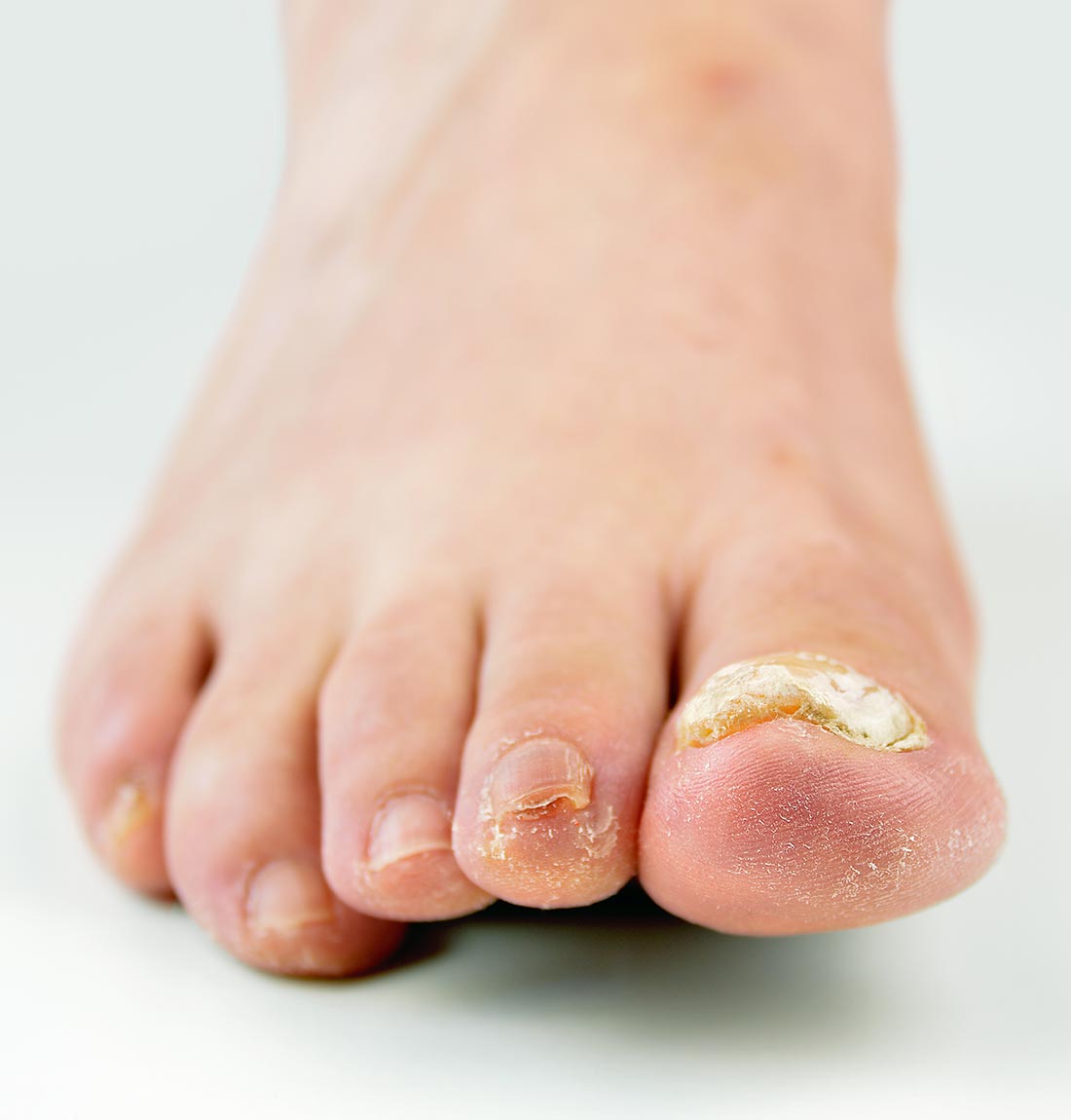
 Nail fungus is a common skin condition and can affect both fingernails and toenails. It is an easy infection to contract and is easily spread. If you have a fungal infection on one of your nails, it can spread to one or more of your nails.
Symptoms
Nail fungal infections have multiple symptoms. You may have one or more of the following changes to your nails:
- Part of the nail turns white, yellow, brown, or another color. At first, it may just be the tip of the nail that is discolored, but left untreated, will spread to the rest of the nail.
- Debris builds up under the nail.
- A nail begins to lift up so that it’s no longer firmly attached to the nail bed.
- The nail turns white, and feels soft, dry, and powdery. It may even thin to the point where you can scrape off the nail.
- Nails thicken and turn yellow or brown. This often affects all of the fingernails.
- A nail splits or crumbles.
Causes
Nail fungus is also spread through contact of infected surfaces, especially in a warm, moist place like a pool deck or locker room. If someone with a fungal infection walked barefoot through the area, all you have to is is walk barefoot in the same area to contract the infection. Having wet nails for a prolonged period of time also makes you susceptible to a nail fungal infection. Some people develop a fungal infection from wearing the same pair of sweaty shoes or boots every day.
Nail fungus can also be spread from skin-to-skin contact from someone who has another fungal infection like athlete’s foot or ringworm on their hands.
Fungal infections can also be spread by sharing an infected pair of nail clippers or towel.
The fungi usually infect a nail by getting into a:
- Small cut in the skin surrounding your nail
- Crack in your nail
- Separation between the nail and finger (or toe)
- The area under a nail gives fungi a warm, moist place to grow. The infection can then spread to other nails and even your skin.
Treatment
Some treatments may begin with your provider trimming part of the nail to confirm that you have nail fungus and not some other type of nail abnormality. They may also remove some of the debris underneath the nails.
Your dermatologist may recommend one of several of the following treatments to cure your nail fungus.
Topical Medication
If your infection is mild, your dermatologist may recommend a treatment that is applied directly to the nail. This treatment helps keep new fungus out while the nail grows. Fingernails typically grow out in 4 to 6 months. Toenails take longer, usually takes 12 to 18 months.
Oral Medication
If you have a more aggressive infection, your provider might prescribe an oral antifungal pill, which has a higher cure rate and work more quickly than topical medications. An antifungal pill can cure a fingernail infection in 2 months and a toenail infection in 3 months.
Nail Removal
If you fungal infection is severe enough that the topical and/or oral medications don’t work, your provider may recommend removing the nail entirely to get rid of the infection. Your dermatologist will refer you to another provider who can perform this procedure. After the treatment, your nail will grow back.