
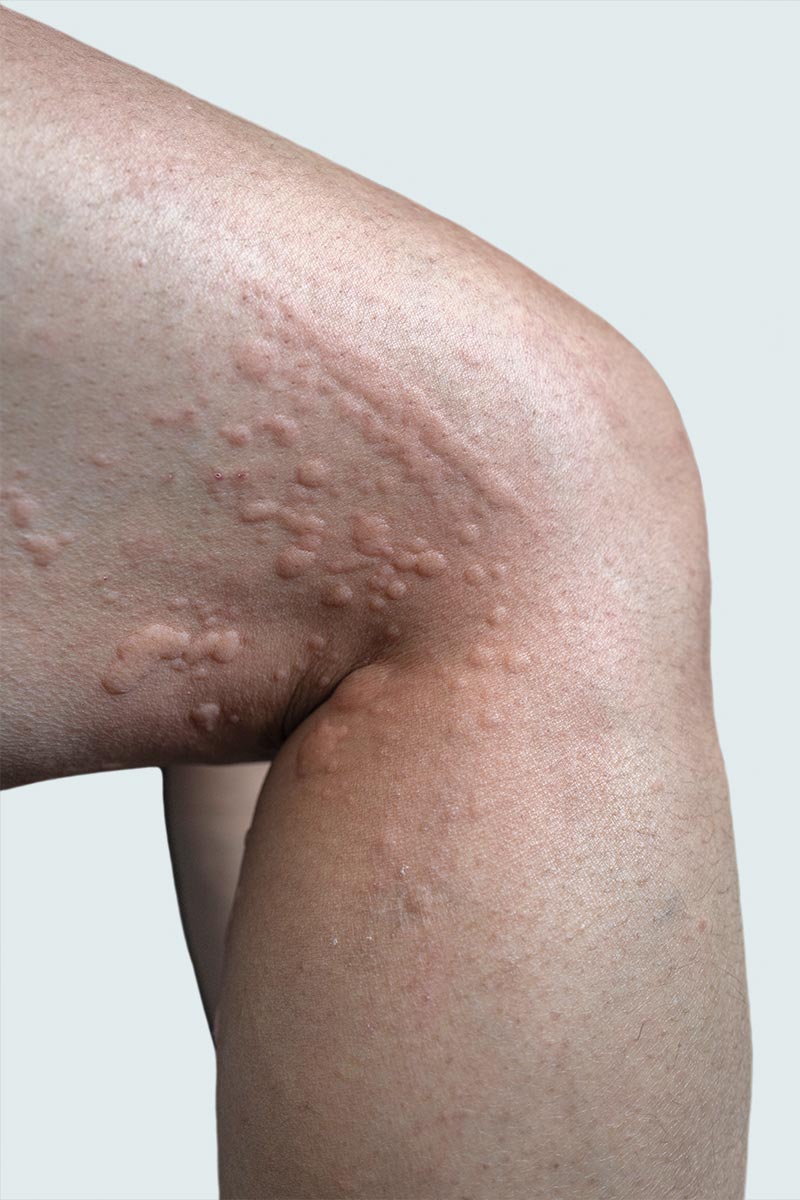
 Urticaria, or hives, are raised, itchy red welts that can appear on any part of the skin. Hives vary in size and can be as small as a pen tip or as large as a dinner plate. They may even connect to form larger welts.
When large welts occur deeper under the skin, the medical term is angioedema. Angioedema can occur with hives, and often causes the eyelids and lips to swell. If this occurs, you should seek emergency care right away, especially if you are having difficulty breathing. The vast majority of hives are only in the skin and not associated with these concerns.
A hive often lasts less than 24 hours, but new hives may appear as old ones disappear, so hives may last a few days or longer. All hives are considered acute at first, meaning they last less than 6 weeks. If a bout of hives lasts longer than 6 weeks, they are considered to be chronic hives.
Causes
Common causes of acute urticaria are an allergy, infection, drug, or food, but many cases have an unknown cause. Some cases have a pretty obvious trigger (for example a certain food or a new medication). Hives typically occur within hours of consuming a culprit food or within a few days of starting a new medication. In kids especially, a virus/ infection may cause hives to occur. Sometimes the illness was so mild that you didn’t know you were sick. Most often, we never identify or find the cause of acute hives, but they eventually just go away.
Chronic urticaria (hives lasting longer than 6 weeks) can be associated with some medical conditions; however the vast majority of chronic hives are idiopathic. This means that even with extensive testing we are not able to identify a cause for the hives. Often we are left managing the hives until they hopefully resolve. Chronic hives may last for years.
Treatment
Antihistamines are the main treatment for most patients with hives. These medications can reduce itching, flatten the raised welts, and potentially shorten the duration of the rash. There are several types of antihistamines that your provider might recommend. Long acting antihistamines like Allegra, Claritin, and Zyrtec, are less likely to cause drowsiness. Shorter acting antihistamines like Benadryl provide faster relief, but wear off quickly and can cause drowsiness. Your provider might recommend treatment with several antihistamines at the same time. In general, antihistamines should be taken on a DAILY basis as recommended by your provider. They should not be taken only when you are breaking out or symptomatic.
Certain things may tend to make hives worse – heat and stress for example. Aspirin and other NSAIDs can make hives worse and should be avoided if possible.
If hives still occur even with numerous antihistamines, we may discuss blood work or other options for treatment. Xolair is an injection that can be given for chronic idiopathic urticaria. Idiopathic urticaria is the most common type of chronic urticaria, and it is when the cause of the rash is unknown. This shot is given by the allergist and used in people who have hives not controlled by antihistamines or other medications.