
 In a typical hair growth pattern, about 10% of your hair will be in a resting (telogen) state. At the end of this phase, which last two to three months, the hair falls out. When you shed hair, a a new hair grows from the same hair follicle. It is normal to lose 50 to 100 hairs per day. However, if you have bald patches or notice your hair thinning, you may be experiencing hair loss.
Types of Hair Loss
Hereditary Hair Loss
The most common type of hair loss is hereditary hair loss, which may also be known as male-pattern baldness, female-pattern baldness, or androgenetic alopecia. About 80 million men and women in the United States experience this type of hair loss. Men may see a receding hairline and bald patches, especially on the top of their head. Women do not go fully bald, but they may see thinning hair and a wider part when they style their hair.
There is no cure for hereditary hair loss, but there are medical treatments that may help some people, like Minoxidil and Finasteride.
Telogen Effluvium
Sometimes, illness, stress, or other events can cause too many hairs to enter the resting state of the hair growth cycle. This leads to excessive shedding and thinning of hair. Typically, bald patches do not appear.
There is no treatment for telogen effluvium, but in many cases, it tends to go away after one of the potential causes is eliminated. Some causes of this type of hair loss are:
- Childbirth or menopause
- High fever, serious infection, or a bad bout of the flu
- Major surgery or chronic illness
- Thyroid disease
- A diet lacking in iron or protein
- Birth control pills or other medicines
- Cancer treatments
Alopecia Areata
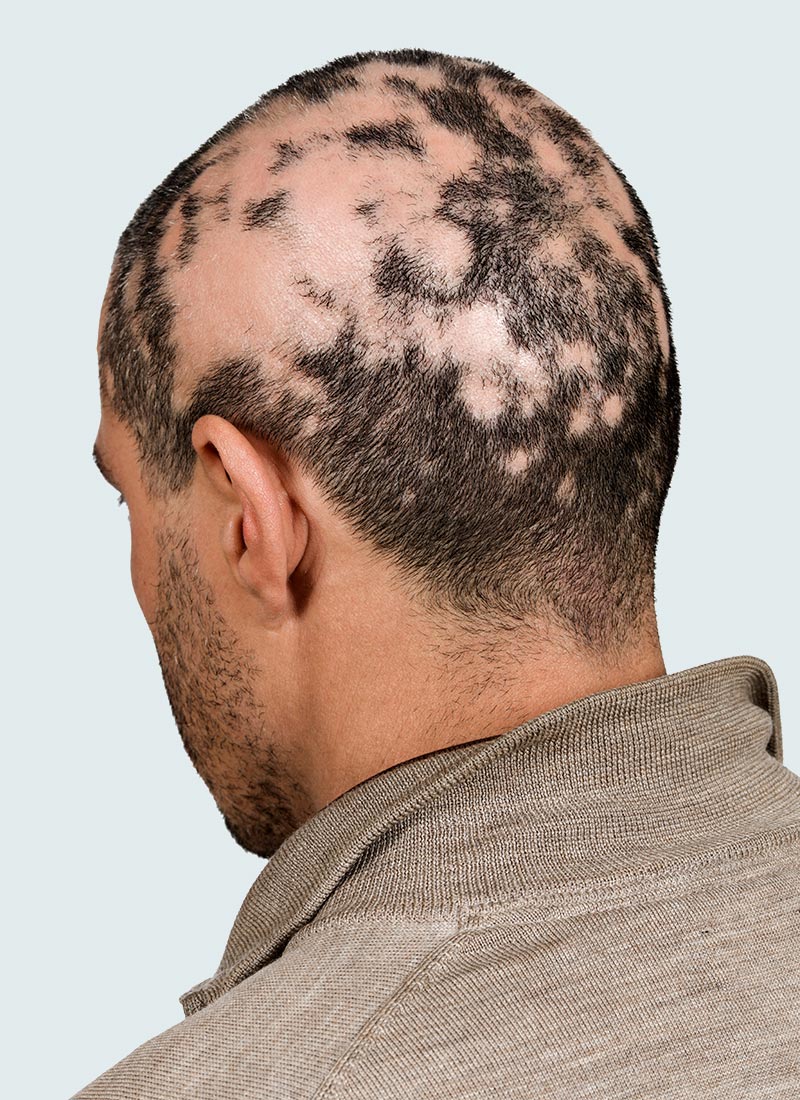
Alopecia areata is an autoimmune disorder that causes smooth, round patches of hair loss. It may lead to total loss of scalp hair, and can sometimes affect body hair as well. This type of hair loss can affect people of any age, including children.
In most cases, the hair will begin to regrow over time. Your provider might recommend treatments like cortisone injections or topical medications to help you regrow your hair more quickly.
Cicatricial (Scarring) Alopecia
This rare disease develops in otherwise healthy people. The disease destroys a person’s hair follicles. Scar tissue forms where the follicles once were, so the hair cannot re-grow. Treatment tries to stop the inflammation, which destroys the hair follicles.
Tinea Capitis
A fungus that can cause scaly patches on the scalp along with broken hair, redness, swelling, and even oozing on the scalp. This fungus is very contagious and is most common in children.
Treatment
The treatment your dermatologist recommends will depend on the reason for your hair loss and the health of your remaining hair.
Non-Prescription Treatment
- Minoxidil: This medicine is applied to the scalp. It can stop hairs from getting thinner and stimulate hair growth on the top of the scalp. It is the only hair regrowth product approved for men and women with adrogenetic alopecia. A dermatologist may combine minoxidil with another treatment.
- Laser devices: Brushes, combs, and other handheld devices that emit laser light might stimulate hair growth. The long-term effectiveness and safety for these devices are not known.
Prescription Medicine
- Finasteride: It comes in pill form and helps slow hair loss in about 88% men. It helps stimulate hair re-growth in about 66% men. Finasteride works by stopping the body from making a male hormone, dihydrotestosterone (DHT).
- Corticosteroid: If your hair loss is caused by inflammation in your body, a dermatologist may inject a corticosteroid into your scalp. This can help stop the inflammation that happens when a person has alopecia areata and other types of hair loss.
Hair Restoration Procedures
- Hair transplantation: Skin on the scalp that has good hair growth is removed and transplanted to areas of the scalp that need hair.
- Scalp reduction: Bald scalp is surgically removed and hair-bearing scalp is brought closer together to reduce balding. Scalp reduction surgery can be performed alone or in conjunction with a hair transplant.
- Scalp expansion: Devices are inserted under the scalp for about 3 to 4 weeks to stretch the skin. This procedure may be performed before a scalp reduction to make the scalp more lax. It also can be performed solely to stretch hair-bearing areas, which reduces balding.
- Scalp flaps: A hair-bearing segment of scalp is surgically moved and placed where hair is needed.