
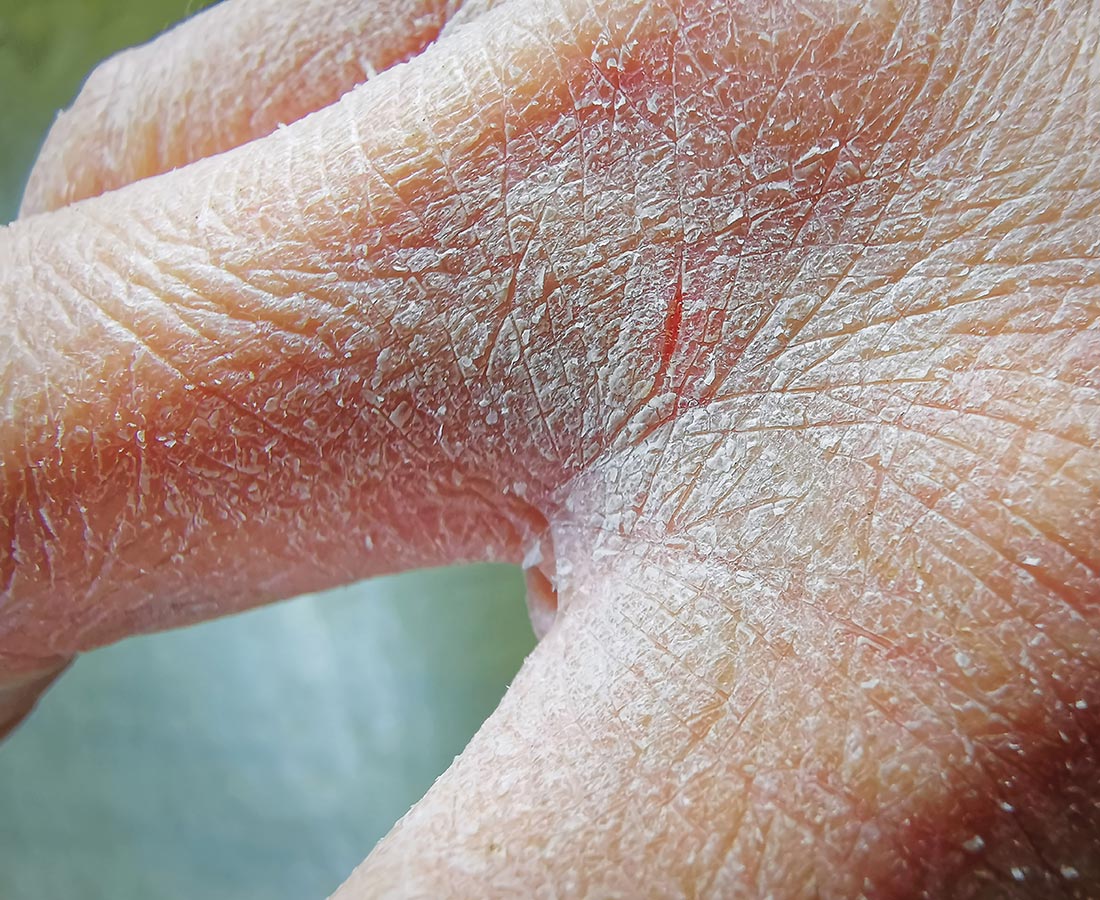
 Dry skin is a common condition that can can occur at all ages. It can cause rough, scaly, or flaking skin; itching; and even cracks in the skin, which may bleed if severe. Sometimes people need a dermatologist’s help to get relief from dry skin. Extremely dry skin can be a warning sign of a skin problem called dermatitis. Dermatitis means inflammation of the skin. It can cause an itchy rash or patches of dry irritated skin. The earlier dermatitis is diagnosed and treated the better. Without treatment, dermatitis often gets worse.
Causes
Anyone can get dry skin. Skin becomes dry when it loses too much water or oil. Some causes of dry skin are:
- Age: Glands in our skin deposit oil onto the skin surface that helps to keep the skin hydrated. As we age, the number of oil glands in our skin decreases and thus makes the skin more susceptible to becoming dry.
- Climate and/or Weather: Places with a very low humidity, such as dry, desert climates, or heated indoors during the winter can contribute to dry skin.
- Skin Disease: People who had atopic dermatitis (also called eczema) as a child tend to have dry skin as adults. Psoriasis also causes very dry skin.
- Excessive Hand Washing: Excessive bathing, hand washing, or scrubbing can strip the oils from your skin, which leads to dry skin.
- Job: Nurses, hair stylists, and people in other occupations often immerse their skin in water throughout the day. This can cause the skin to become dry, raw, and cracked.
Caring for Your Dry Skin
The best way to care for your dry skin is to establish a good skin care regimen. Good skin care may require you to develop a new routine, but it will be well worth it in the long run.
The following are some important measures to help with preventing and treating dry skin and eczema rashes:
- Take only warm baths and showers. Do not take a hot shower.
- Use a mild, fragrance free soap or a soapless cleanser such as Cetaphil or Cerave.
- Soap should be applied with your hands only to dirty areas (underarms, feet, groin). In general, the shower/ bath water is enough to wash the rest of your body.
- After bathing, PAT dry with a towel. Do not rub the skin roughly with a towel.
- Apply a good moisturizing cream (not lotion) twice daily, once immediately after bathing and again sometime during the day.
- Your provider may recommend an over the counter lactic acid lotion.
- Switch to a fragrance free detergent. You may also try double rinsing your clothes.
- Avoid fabric softeners and dryer sheets.
- Avoid all fragranced products such as body lotions and perfumes.
- Try not to scratch. Scratching often makes the itching worse and can lead to a cycle of itching and scratching.
- Use a humidifier at night, especially during the winter, to help replenish moisture in the air.
- Do not use rubbing alcohol, Lanacaine, Neosporin, Caladryl, Calamine lotion, Clorox, or Lysol on your skin. These products can be drying and/or irritating and often make your condition worse.