
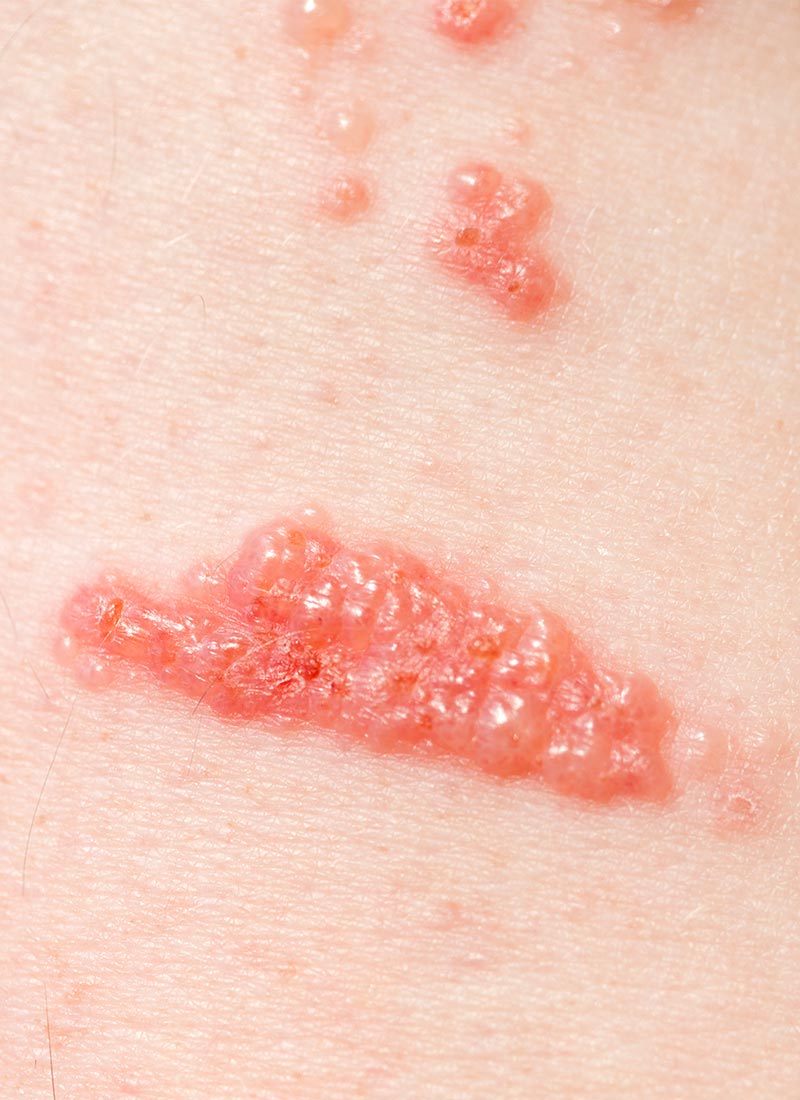
 Almost everyone gets contact dermatitis at least once in their lives. We get contact dermatitis when something that our skin touches causes a rash. Some rashes happen immediately, but most take time to appear. Rashes can be caused by an allergic reaction (allergic contact dermatitis) or can develop as a result of skin irritation.
Allergic Contact Dermatitis
Allergic contact dermatitis is an eczema that occurs when allergy-causing substances touch your skin. If you are sensitive to them, allergens can cause an itchy rash on swollen, reddened skin that may blister, ooze, form a crust, or flake off. Poison ivy and poison oak are two common examples of contact dermatitis.
Other common allergens that can cause allergic contact dermatitis are:
- Fragrances
- Certain metals (like nickel in jewelry)
- Certain topical medications
- Some skin care products
- Latex and other synthetic rubber products
- Plant oils and botanical extracts, such as tea tree, sesame, cinnamon, peppermint, olive, and castor oils
Irritant Contact Dermatitis
Irritant contact dermatitis is a more common form of contact dermatitis that can look very similar to an allergic contact dermatitis. However, in this rash, you are not allergic to the substance. The rash is caused by prolonged contact with something that irritates the skin.
Common types of irritant contact dermatitis are:
- Diaper rash
- Acid burn
- Dry, cracked hands due to frequent hand washing
- Irritated skin around the mouth due to lip licking
- Pepper spray
- Several professions are especially susceptible to irritant contact dermatitis, including beauticians, nurses, bartenders, and others who spend lots of time with wet hands.
If your rash does not clear up within a few weeks, please consult your provider. When contact dermatitis develops, treatment is important. It can prevent the contact dermatitis from worsening and help your skin heal.