
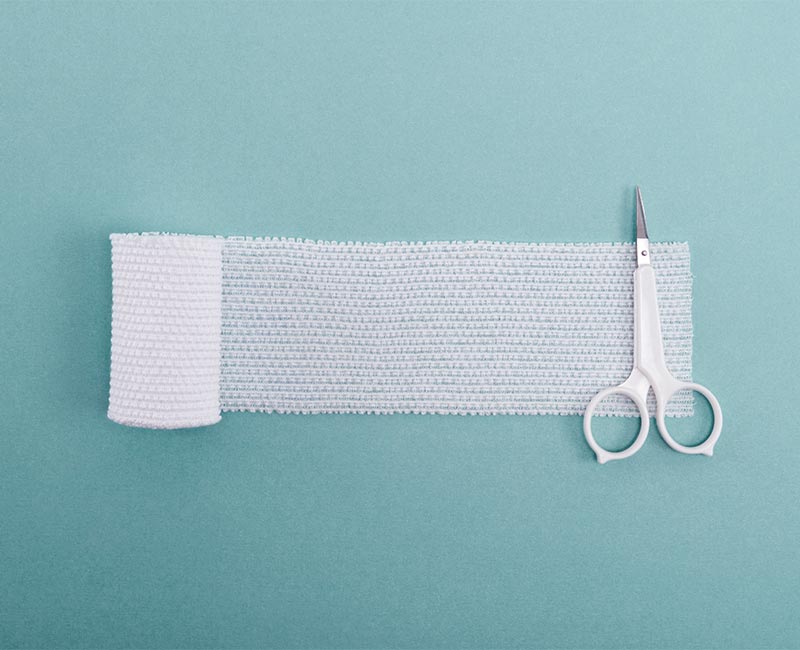
 Your surgical site should be kept dry and bandaged for 24 hours after the procedure. You may shower daily; however, do not get into pools, hot tubs, lakes, lakes, oceans, rivers, etc. until your site is completely healed, and any sutures are removed (usually 7-14 days).
Wound Care Instructions
Clean your surgical site one to two times daily, starting 24 hours after the procedure:
- Clean the wound with vinegar and water soaks (dilute 1 tablespoon of white vinegar in 1 pint of warm water) and then gently blot using a clean cloth or gauze. The surgical site should be kept free of dried blood and crust.
- Apply a layer of ointment (Vaseline petroleum jelly or Aquaphor) to the wound and cover with a bandage.
- Repeat daily cleaning and bandaging until the site is completely healed or until the sutures have been removed.
Please Note: If you find Band-Aids irritating to your skin, a small piece of nonstick gauze with paper tape might be a better choice to bandage your surgery site.
Pain
Post-operative pain is generally slight, and you may take Tylenol if you have no liver disease. After the first 48 hours you can alternate Tylenol and Ibuprofen. If you feel that you need prescription pain medication, please call our office at 205-682-8022.
Bleeding
Following surgery, bleeding is always possible.
If bleeding occurs, apply firm pressure to the area for 20 minutes before rechecking the site. Most of the time, this will stop the bleeding. If the bleeding continues, apply pressure for an additional 20 minutes. If this does not stop the bleeding, contact our office at 205-682-8022. Some discharge or drainage from your surgical site is normal. Do not be concerned unless your operative site is bleeding and firm constant pressure does not stop it.
Infection
Infection is seldom a problem after surgery. Signs of infection include a combination of increasing redness, swelling, pain and yellow-green purulent discharge at your operative site. In the rare cases when infection develops, symptoms typically begin several days after surgery. Red streaking from the wound site might be an indicator of a serious wound complication; if this happens, please call our office immediately. Remember, some drainage from the surgical site as well as some redness and tenderness are normal.
Exercise
Avoid all exercise for 24-48 hours following your procedure. It takes several months for a scar to gain strength at your surgery site. Limiting tension at the surgical site for several weeks is advisable. Your doctor will likely advise limiting exercise that involves the surgical site for at least two weeks or longer.
Medications
Do not take herbal supplements such as Vitamin E, Fish Oil, Garlic, ginger, St John’s wort, ginseng or Ginkgo Biloba for 3 days after the surgery as these may increase bleeding. Avoid non-steroidal anti-inflammatory medications (i.e. Advil, Motrin, Ibuprofen, etc.) for 48 hours after surgery. Avoid aspirin for 3-5 days after surgery if possible. Please check with your General Physician before stopping any of these medications or aspirin therapy if they have been recommended to you by a physician. Do not drink alcoholic beverages for 2 days after surgery.
Scar
There will be a scar and redness after surgery. The scar will continue to improve for 1-2 years; however, it will be permanent. Everyone heals differently, and the final scar appearance depends on the individual’s ability to heal. Protecting your scar from the sun by using sunscreen, Band-Aids, or protective clothing will also help it to heal better. However, because of the unpredictability of wound healing, no guarantees can be made as to the final appearance of the scar.